 Zapisz
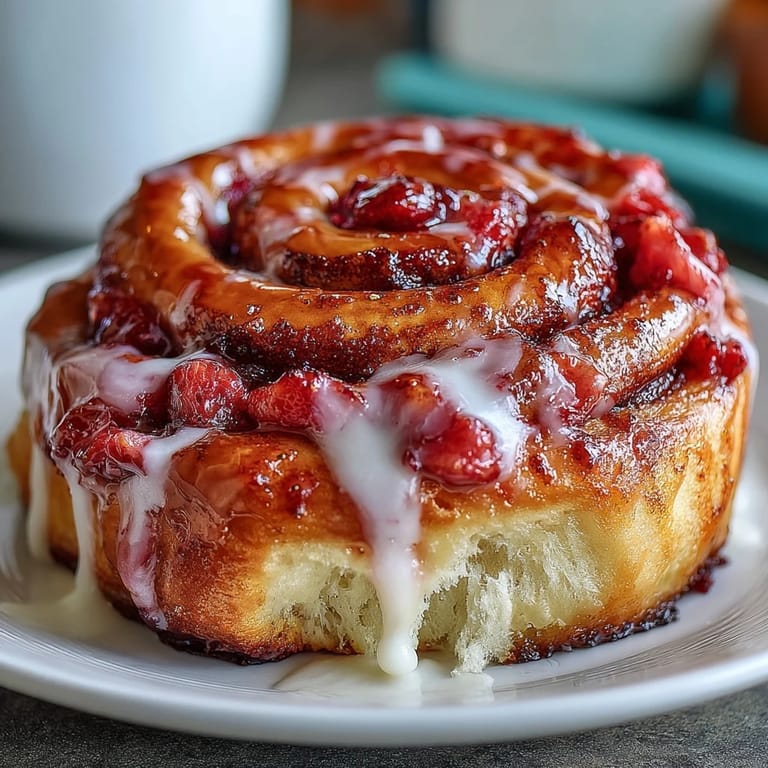
 My neighbor showed up at my door one Saturday morning with a container of homemade strawberry cinnamon rolls, still warm from her oven, and I realized immediately that my entire breakfast repertoire had been missing something essential. The way the cream cheese glaze pooled into the swirls, how the brioche dough yielded under my fork like a cloud, the tartness of the strawberry cutting through all that richness—it clicked. Now these rolls are my answer to every occasion that calls for something that feels both indulgent and somehow still wholesome enough to eat at 8 a.m.
I made these for a Sunday brunch when my sister was visiting, and the moment she bit into one, she literally closed her eyes and didn't speak for a full five seconds. That's the kind of reaction that makes you want to nail a recipe, and somehow these rolls deliver every single time—there's no middle ground where they turn out just okay. They're either spectacularly fluffy and fragrant, or they're sitting on your cooling rack making everyone in your house temporarily forget they have places to be.
Ingredients
- Warm milk (260 ml): This activates the yeast and keeps the dough tender—use a thermometer if you have one, aiming for around 43°C, because milk that's too hot kills the yeast before it can do its job.
- Instant dry yeast (10 g): One tablespoon is your magic ingredient for rise and flavor; check the expiration date because old yeast is the silent culprit in dense rolls.
- All-purpose flour (540 g): Weight matters more than volume here, so weigh it if you can, because a cup packed tightly versus loosely changes the dough texture entirely.
- Granulated sugar (65 g): This feeds the yeast and adds subtle sweetness without making the dough cloying; it's the difference between balanced and heavy.
- Salt (1 tsp): Don't skip it—salt strengthens gluten development and keeps the flavor from tasting one-dimensional.
- Egg, room temperature (1 large): Cold eggs make the dough harder to incorporate smoothly, so pull it from the fridge about 30 minutes before mixing.
- Unsalted butter, very soft (80 g): Very soft means you can press your finger through it easily; cold butter won't incorporate properly and leaves greasy pockets.
- Fresh or frozen strawberries (250 g): Either works beautifully, though frozen strawberries sometimes release more liquid, which is actually your friend because it concentrates flavor.
- Lemon juice (half a lemon): This brightens the strawberry filling and prevents it from tasting overly sweet or flat.
- Cream cheese, softened (100 g): Room temperature is non-negotiable for a smooth glaze; cold cream cheese seizes and becomes lumpy.
- Unsalted butter for glaze (40 g): Softened butter emulsifies with the cream cheese to create that silky, spreadable consistency.
- Powdered sugar (60 g): Sift it if you have time; lumps in the glaze are visible and taste grittier than you'd think.
- Vanilla extract (1 tsp): A small amount that rounds out the cream cheese tang without announcing itself.
- Strawberry puree from filling (2 tbsp): Reserve this before you finish cooking the filling; it gives the glaze subtle color and flavor authenticity.
Tired of Takeout? 🥡
Get 10 meals you can make faster than delivery arrives. Seriously.
One email. No spam. Unsubscribe anytime.
Instructions
- Cook the strawberry filling until jammy:
- Combine your strawberries, lemon juice, and sugar in a saucepan over medium heat, stirring every couple of minutes as they soften and release their juice. You're watching for the moment when the mixture thickens enough to coat a spoon—usually around 10 minutes—then blend it smooth and let it cool completely on the counter or in the fridge.
- Mix the dough like you mean it:
- In your stand mixer, combine the dry ingredients first, then add the warm milk, softened butter, and room-temperature egg, letting the dough hook knead everything on medium speed for 5 to 7 minutes until it's smooth and elastic and pulls away from the bowl sides slightly. You'll know it's ready when it springs back if you poke it.
- Nurture the first rise:
- Cover the bowl with a damp towel and set it in a warm spot—an unlit oven with the light on works beautifully—and let it sit for about 2 hours until the dough has roughly doubled in bulk. Don't rush this; the slower rise means better flavor development.
- Roll and fill with confidence:
- On a floured surface, roll your dough into a 40 by 30 centimeter rectangle, working gently so you don't deflate all that beautiful air you just developed. Spread the cooled strawberry filling evenly across the dough, leaving about 2 centimeters of bare dough on one long edge, then roll it up tightly from the opposite side and cut into 12 pieces with a sharp knife or unflavored dental floss.
- Set them up for their second rise:
- Arrange the rolls cut-side up in a greased 9 by 13 inch baking dish with a little space between each one, cover loosely, and let them puff for 30 to 60 minutes until they're noticeably puffy and feel slightly springy when you touch them gently.
- Bake until golden and set:
- Preheat your oven to 180°C, then slide the rolls in for 20 to 25 minutes, watching for the moment when the tops turn deep golden and the edges feel set but the center still has a tiny bit of give. Let them cool in the dish for just a few minutes before glazing.
- Whip the glaze until smooth:
- Beat your softened cream cheese and butter together with an electric mixer, then add the powdered sugar, vanilla, and reserved strawberry puree, beating until everything is pale and fluffy and completely smooth with no lumps visible. Cold puree straight from the fridge keeps the glaze from getting too soft.
- Finish and serve:
- Spread a generous amount of glaze over the slightly warm rolls while they're still in the dish, letting it melt slightly into all the crevices. These taste best eaten within an hour or two of glazing, while the rolls are still tender and the glaze still has a soft-set quality.
 Zapisz
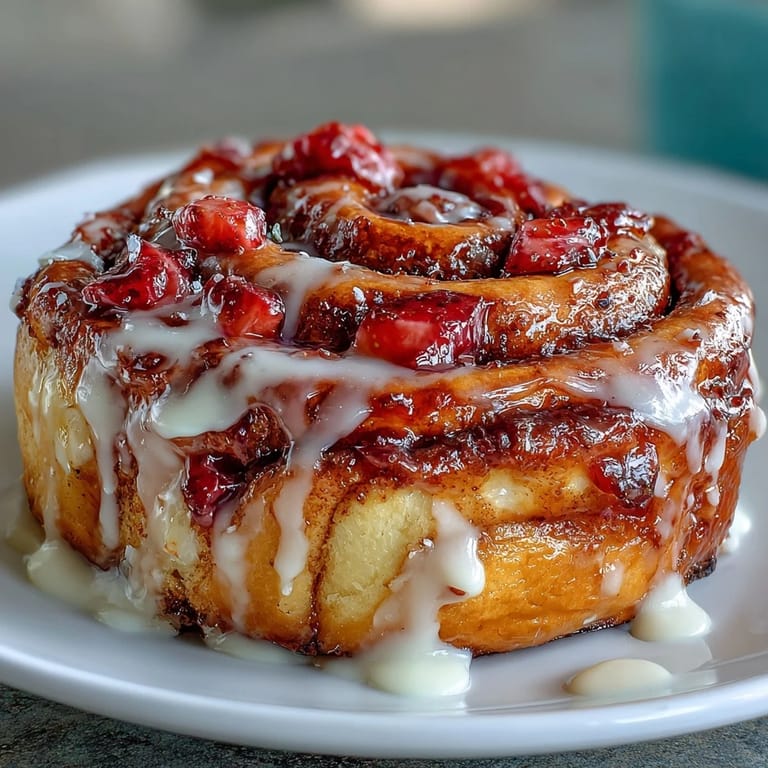
 There's a moment after you cut the dough and arrange those rolls in the baking dish where they look impossibly small, and you wonder if you did something wrong—then you come back 45 minutes later and they've transformed into this golden, pillowy landscape, and suddenly you understand why people fall in love with bread baking. These rolls have a way of making you feel like a competent human in your own kitchen.
Why Strawberry Filling Matters More Than You'd Think
Using actual strawberries instead of jam creates a filling that tastes bright and real, not like you're using a commercial product to cover up something lesser. The berries break down into a jammy consistency that's thick enough to hold its shape but still tastes like fruit, and when you mix in that lemon juice, you get acidity that cuts through the richness of the brioche and cream cheese glaze in exactly the way your palate needs.
The Overnight Refrigerator Method Changes Everything
If you shape the rolls the night before and refrigerate them unbaked, you can wake up, preheat the oven, and have these rolls ready to eat in about 45 minutes—the cold rise means the flavors have time to develop even more, and the dough is easier to handle because it's firmer. I've found that overnight rolls actually bake more evenly because the dough temperature is more consistent throughout, resulting in better browning on the bottom and sides.
Storage and Make-Ahead Strategies
These rolls are forgiving whether you're planning ahead or eating them fresh, which makes them perfect for weekends or when you want to feel like you made something impressive without the stress of timing everything exactly. Room-temperature storage works for glazed rolls for about two days, while unglazed rolls keep in the fridge for up to five days and can be reheated gently before glazing.
- Freeze unglazed baked rolls in an airtight container for up to three weeks, then thaw and glaze them when you're ready to serve.
- You can also freeze unbaked rolls after shaping—thaw them overnight in the fridge, then let them rise and bake as usual the next day.
- Always glaze rolls when they're still slightly warm so the glaze sets into the crevices beautifully rather than sitting on top.
 Zapisz
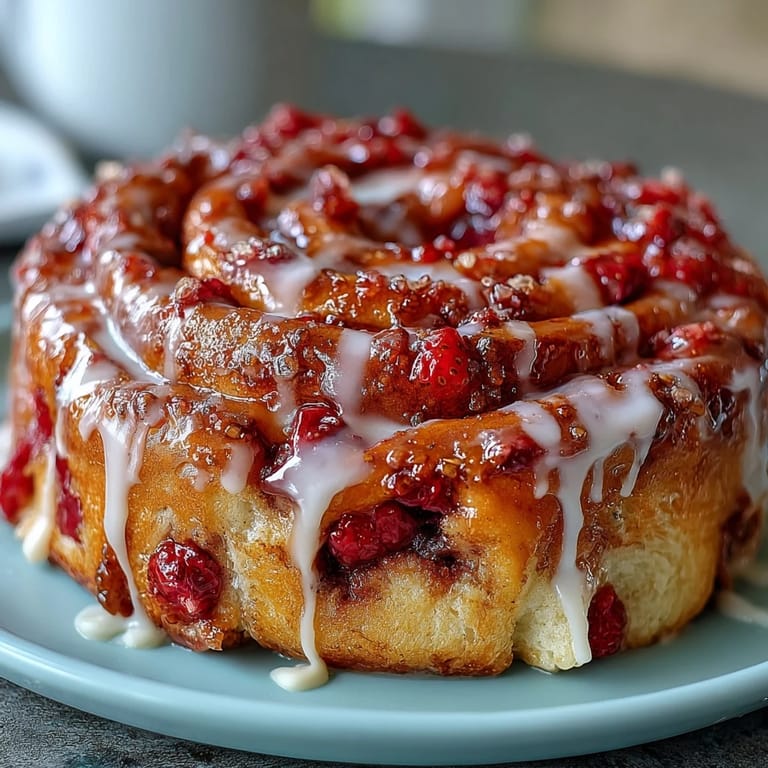
 Making these rolls means you're choosing to spend a Saturday morning with something that requires presence and a little patience, and the payoff is breakfast that tastes like you went to culinary school. That's worth the three hours from start to finish.
Najczęściej zadawane pytania dotyczące przepisów
- → Czy mogę użyć mrożonych truskawek?
Tak, mrożone truskawki świetnie się sprawdzą. Rozmroź je przed użyciem i odlej nadmiar płynu, aby konfitura była odpowiednio gęsta.
- → Jak przechowywać bułki?
Polukrowane bułki trzymaj w temperaturze pokojowej do 2 dni w szczelnym pojemniku. Niepolukrowane możesz przechowywać w lodówce przez 5 dni.
- → Czy mogę zamrozić surowe bułki?
Nieproblemowo. Uformuj bułki, zamroź je na talerzu, a następnie przełóż do woreczka. Przed pieczeniem rozmroź i zostaw do wyrośnięcia.
- → Czy mogę przygotować ciasto wieczorem?
Zdecydowanie. Uformuj bułki, przykryj folią i włóż do lodówki na noc. Rano wyjmij je, poczekaj aż osiągną temperaturę pokojową i wyrosną, potem piecz.
- → Co mogę użyć zamiast serka do lukru?
Zamiast serka twarogowego możesz przygotować klasyczny lukier z cukru pudru i mleka, lub użyć mascarpone dla jeszcze bardziej kremowej konsystencji.