 Zapisz
 My neighbor Maria taught me that minestrone isn't something you perfect, it's something you listen to while it cooks. One rainy afternoon, she stood at her stove stirring this soup and told me it's the Italian way of saying yes to whatever vegetables are in your kitchen. I watched her add a handful of spinach at the last moment, tasting and adjusting, and realized minestrone is less a recipe and more a conversation between you and what's in season.
I made this for my sister during her first week in a new city, when she needed comfort more than conversation. She sat at my kitchen counter eating bowl after bowl, and by the third serving she started talking about her day. That's when I understood minestrone's real magic, somewhere between nourishment and friendship.
Ingredients
- Olive oil: Use good quality oil, the kind you'd drizzle on bread, because it becomes part of the flavor when the vegetables soften into it.
- Onion, carrots, and celery: These three together are the foundation every Italian cook starts with, a rhythm your hand learns.
- Garlic: Minced fine so it dissolves into the broth rather than shouting at you from a spoon.
- Zucchini and green beans: They stay tender without disappearing, giving you something to bite into.
- Spinach or kale: Add this at the very end so it stays bright and doesn't turn into something your grandmother wouldn't recognize.
- Diced tomatoes: Canned is honest here, consistent and already broken down, which is what you need.
- Vegetable broth: Six cups builds the body of the soup without overwhelming the vegetables.
- Dried oregano, basil, and thyme: These three dried herbs work together like a small Italian choir, each one bringing its own note.
- Bay leaf: It sits quietly in the pot doing its work, then you fish it out before serving.
- Cannellini and kidney beans: They soften the soup's edges and make it feel substantial without heaviness.
- Small pasta: Ditalini or elbow pasta works best because the pieces fit on a spoon with everything else.
- Parmesan cheese: A generous handful grated fresh, melting into the heat of the soup.
Tired of Takeout? 🥡
Get 10 meals you can make faster than delivery arrives. Seriously.
One email. No spam. Unsubscribe anytime.
Instructions
- Build your base:
- Heat the olive oil over medium heat and add your onion, carrots, and celery. Let them soften for five or six minutes, stirring now and then, until the kitchen smells like the beginning of something good.
- Bring in the garden:
- Stir in the minced garlic, zucchini, and green beans, cooking for a few minutes until everything relaxes into the oil.
- Wake up the broth:
- Add your tomatoes, broth, and all the dried herbs along with a bay leaf. Bring this to a gentle boil, then taste for salt and pepper even though it needs time to develop.
- Let it breathe:
- Lower the heat, cover the pot, and let it simmer for about fifteen minutes while you do something else, maybe read or look out the window.
- Introduce the pasta and beans:
- Stir in your pasta and both kinds of drained beans, letting them simmer uncovered for ten to twelve minutes until the pasta is tender but still has a little resistance when you bite it.
- Finish with green:
- Add your spinach or kale and cook for just two or three minutes until it wilts and turns deep green, then fish out the bay leaf.
- Taste and adjust:
- This is the moment to taste a spoonful of broth and decide if it needs more salt, more pepper, or just time to cool enough to eat.
- Serve with intention:
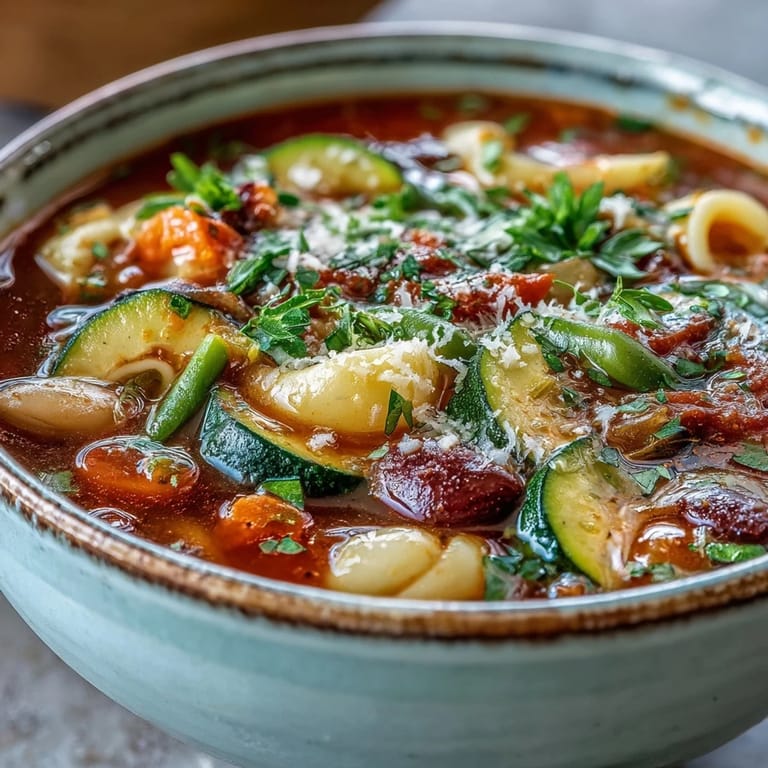
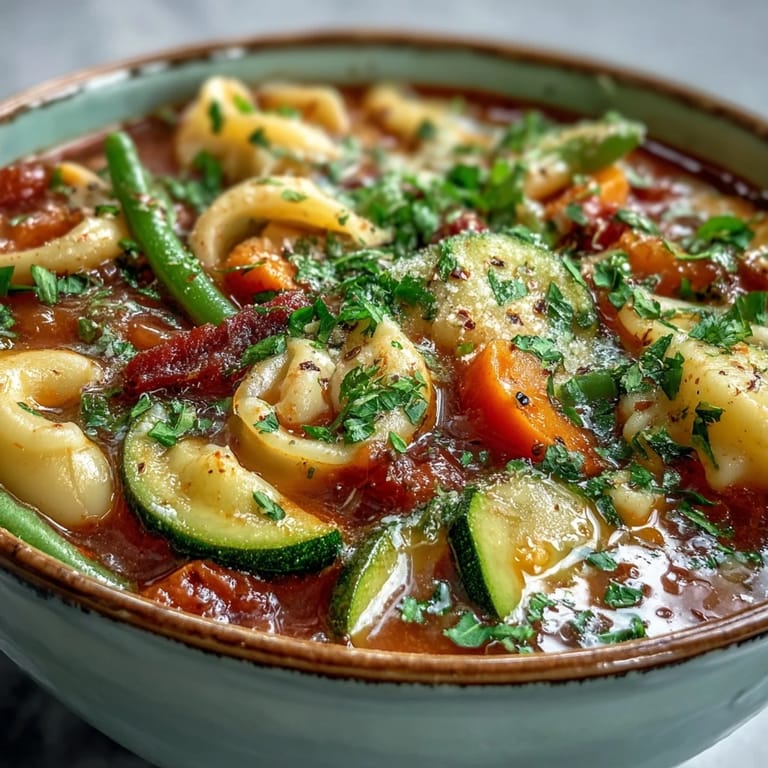
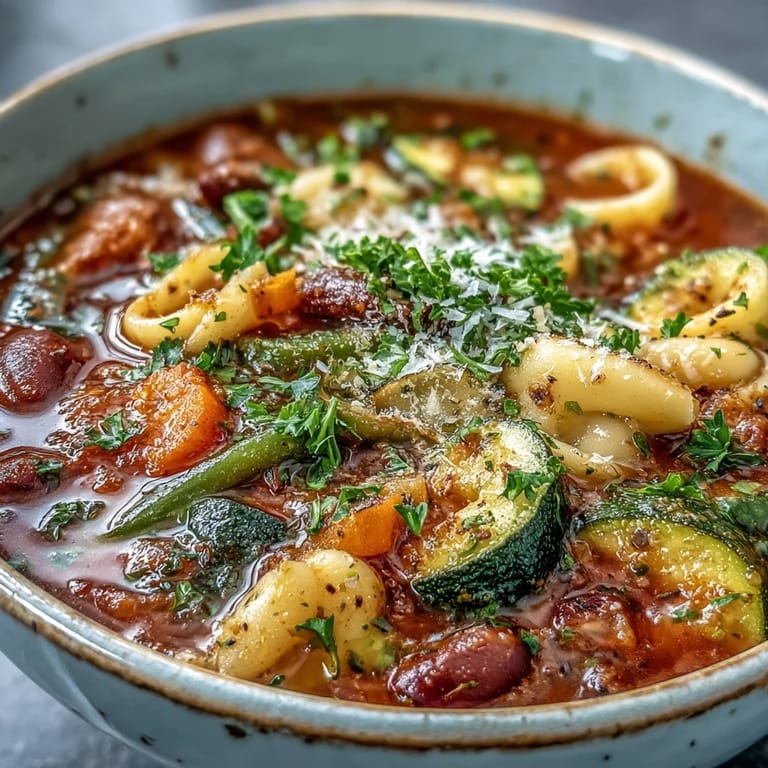
- Ladle the soup into bowls while it's still steaming, shower it with fresh Parmesan, a scatter of parsley, and a thin drizzle of your best olive oil.
 Zapisz
 Years later, I made this soup for someone I had just met, and we spent the evening talking about our favorite vegetables like we'd known each other forever. That's when I realized minestrone isn't just a recipe, it's an excuse to slow down and feed people something honest.
Why Minestrone Works
There's a reason this soup has survived centuries in Italian kitchens, it asks for whatever you have and promises to make it better together. Every vegetable you add finds its place in the broth without competing or disappearing. The beans give you protein without heaviness, the pasta catches the flavor, and by the time everything hits your spoon, it tastes like it took hours even though you've been cooking for less than one.
Variations and Kindness
My friend who doesn't eat dairy makes this with nutritional yeast instead of Parmesan and swears it's better, which tells you something about how forgiving this recipe is. I've made it with cabbage and potatoes when that's what was in the vegetable drawer, and once I added a can of chickpeas when I was out of beans and no one noticed the difference. The soup seems to expand and welcome whatever you offer it.
The Ritual of Minestrone
There's something about standing over a pot of simmering soup that makes you feel like you're doing something that matters, even on a regular Tuesday. The smell builds slowly, then all at once your whole kitchen is warm and welcoming and someone will definitely ask for seconds. This is the kind of cooking that doesn't require precision, just presence and the willingness to taste as you go.
- Serve this with thick slices of toasted Italian bread for soaking up the last spoonful of broth.
- A light red wine like Chianti pairs beautifully if you're in the mood for it.
- Make a double batch and freeze half, because minestrone gets even better when you've forgotten you made it.
 Zapisz
 Minestrone taught me that the best meals are the ones where people linger at the table longer than they planned. Make this soup whenever someone needs feeding, and you'll understand why it's been passed down through generations.
Najczęściej zadawane pytania dotyczące przepisów
- → Jakie warzywa mogę użyć w zupie minestrone?
Możesz użyć dowolnych sezonowych warzyw takich jak ziemniaki, kapusta, groszek, dynia czy bakłażan. Tradycyjna wersja zawiera cebulę, marchew, seler, cukinię, fasolkę szparagową i szpinak, ale przepis jest bardzo elastyczny.
- → Czy mogę przygotować zupę minestrone wcześniej?
Tak, zupa minestrone smakuje jeszcze lepiej następnego dnia, gdy smaki mają czas się połączyć. Przechowuj w lodówce do 3-4 dni w szczelnym pojemniku. Podgrzewaj na wolnym ogniu, dodając odrobinę wody lub bulionu jeśli zgęstnieje.
- → Czy mogę zrobić zupę minestrone wegańską?
Tak, po prostu pomiń ser Parmezan lub użyj roślinnej alternatywy. Reszta składników jest naturalnie wegańska. Zupa jest świetna bez dodatku sera, a smak można podkreślić dodatkową porcją świeżych ziół i oliwy z oliwek.
- → Jaki makaron najlepiej pasuje do minestrone?
Najlepiej sprawdzają się małe kształty makaronu takie jak ditalini, łokciki, małe muszelki lub risoni. Ich wielkość jest idealna do łyżkowania zupy. Można również użyć makaronu orzo lub rozłupać spaghetti na mniejsze kawałki.
- → Jak zagęścić zupę minestrone?
Część makaronu rozpuści się podczas gotowania, naturalnie zagęszczając zupę. Jeśli wolisz gęstszą konsystencję, możesz użyć więcej makaronu lub zblendować część warzyw. Alternatywnie dodaj ziemniaki lub puree z białej fasoli.
- → Czy mogę zamrozić zupę minestrone?
Tak, ale zamrażaj bez makaronu, który rozmięknie po rozmrożeniu. Dodaj makaron świeży podczas podgrzewania rozmrożonej zupy. Przechowuj w zamrażarce do 3 miesięcy w szczelnych pojemnikach lub woreczkach.